
Table of ContentCloseOpen
- Key Takeaways
- Who This Guide Is For, and What It Deliberately Avoids
- Where to Play Online Roulette: Casino Selection and Offer Access
- How to Play Roulette: Basic Rules and Game Round Flow
- Roulette Bet Types, Payout Ratios, and Probabilities
- European Roulette, American Roulette, and Alternative Game Variants
- Live Dealer Roulette: Architecture and Real-Time Streaming
- Roulette Strategy: Risk Control Without Profit Myths
- FAQ: Online Roulette Questions Answered
- Next Steps: Your Practical Action Plan
- Appendix: Source Notes and Editorial Corrections
«Before you deposit a single rupee, check the withdrawal rules and understand the wheel math. A welcome bonus looks enticing on paper, but if you do not factor in the house edge or the typical 5% roulette wagering contribution, you are flying blind.» Nisha Rao, Content Editor at Casino and Betting India

Last updated: February 2026 · Reviewed by: Casino and Betting India editorial desk (licensing, payments and game-math verification) · Audience: adults 18+/21+ only
Online roulette remains one of the most widely played casino games in the world. Simple mechanics, precise mathematics, no skill curve. For readers searching for casino information in India, understanding how roulette online actually works, from basic roulette rules and table layouts to live dealer roulette dynamics and bonus terms, matters more than any promotional headline.
Whether you are testing a roulette demo to learn the sequence of a spin, or comparing roulette real money options across licensed platforms, this guide gives you a compliance-first breakdown of roulette games, payouts, probabilities and betting behaviour. No income promises. Just the numbers and the risks.
Key Takeaways
⚡ THE 60-SECOND SUMMARY
- Pick the wheel first, the bonus second. European roulette (37 pockets) carries a 2.70% house edge; american roulette (38 pockets) nearly doubles it to 5.26%; French roulette with La Partage drops even-money bets to 1.35%.
- Payout ratios never change between variants. Only your probability of winning does. Straight Up pays 35:1 on both wheels, but hits 2.70% of the time in Europe versus 2.63% in America.
- Roulette is a poor bonus-clearing game. Contribution is usually just 5% to 10% per bet, so a ₹10,000 bonus with 30x wagering can demand ₹6,000,000 in roulette turnover.
- No betting system beats the edge. Martingale, Fibonacci, D'Alembert and Labouchere reshape variance, not expected value. Monte Carlo testing across 10,000 sessions converges on the same 2.70% loss rate.
- Live dealer tables stream real wheels from Riga, Malta and Bucharest studios. Hybrid formats (Lightning, Double Ball, Mega Roulette) trade lower base payouts for multiplier upside.
- India-specific reality check: UPI and NetBanking are the dominant INR rails, KYC is mandatory before any cashout, and real-money gaming is heavily restricted under the Promotion and Regulation of Online Gaming Act 2025 and Rules 2026.

Who This Guide Is For, and What It Deliberately Avoids
This is written for an English-speaking reader in India who has typed something like «is online casino legal in India» or «safe roulette casino» and wants a straight answer before spending anything. So a quick scope note, because expectations matter.
- What you will find here:how a roulette round is structured, what every bet type pays, how the house edge is generated, how INR deposits and withdrawals behave in practice, what KYC actually requires, and where bonus terms quietly work against table-game players.
- What you will not find:a «best casino» ranking, a guaranteed system, or a claim that any of this is a way to make money. Roulette has a fixed negative expectation. That is not pessimism, it is arithmetic, and it is the single most useful thing a new player can internalise.
- How the information was checked:licence numbers were looked up in public regulator registers, RNG and game-testing certificates were matched to their issuing labs, payout schedules were compared against venue-level rule publications, and India-specific payment behaviour was tested on live cashiers. Where a source only partially supports a claim, we say so in the appendix at the end.
One more framing point. Every number in this guide is a long-run average, not a promise about your next session. Short-term results swing wildly. That gap between average and experience is exactly where most poor decisions happen.
Where to Play Online Roulette: Casino Selection and Offer Access
Selecting a reliable roulette casino means examining regulatory credentials, technical fairness, payment safety and game diversity. For Indian players running «online casino India» searches, the practical first filter is clear INR transaction rules via UPI or NetBanking, transparent bonus terms and verified software providers. Readers comparing shortlists of licensed online casinos in India should treat licence verification, not bonus size, as the primary criterion.
Bonus size is the easiest thing to advertise. Payout reliability is the hardest thing to fake.
How to Choose a Safe Online Roulette Casino
To choose a safe roulette casino, verify three things: that the operator holds a valid remote gambling licence (such as the Curaçao Gaming Control Board under the LOK framework, or the Malta Gaming Authority), that it features independently audited Random Number Generators (RNG), and that it streams certified live dealer tables from established providers like Evolution or Pragmatic Play Live.
In our evaluation of operator audit frameworks for the iGaming analysis project, we reviewed 30 online casino platforms targeting international users. We checked licensing registers, timed UPI deposit friction, verified RNG certification seals from eCOGRA or iTech Labs, and flagged platforms hiding withdrawal limits. That process let us filter out untrustworthy operators and build a 40-point safety verification checklist for real-money table games.
When comparing roulette casinos, prioritise platforms that display clear payout policies, publish game RTPs (Return to Player), support local currency accounts, and keep support responsive during identity verification (KYC).
Four verification anchors we apply to every roulette-focused operator:
- Licence lookup, not licence logo. Confirm the licence number inside the regulator's public register (for example, the Curaçao Gaming Control Board register, which has presented itself as the LOK online-gambling regulator since August 2025) instead of trusting a footer badge.
- RNG and games-testing evidence. Remote casino standards require random number generation to be «acceptably random», demonstrable through statistical testing: uniform distribution, unpredictability, no repeated cycles, no predictable seeding. Look for iTech Labs, eCOGRA, GLI or BMM certificates dated within the last 24 months.
- Live studio provenance. Evolution publicly documents studios in Riga, Malta and several regulated US states; Pragmatic Play Live broadcasts roulette around the clock from its Bucharest studio and Smart Studio installations. A table with no named provider is a red flag.
- Cashier transparency. Withdrawal limits, processing windows and fees should be visible before registration, not buried inside a support ticket.
INR Payments, Withdrawals and KYC for Indian Players
Payment friction, not game selection, is where most roulette sessions actually end badly. The table below summarises the typical rails, speeds and limits we observed across the platforms we audited. Individual operators vary, so always confirm inside the cashier before depositing.
| Payment Method | Deposit Speed | Withdrawal Speed | Typical Min/Max Limits (INR) | Identity Check (KYC) Required? |
|---|---|---|---|---|
| UPI (GPay, PhonePe, Paytm) | Instant | 1 to 4 hours | ₹500 / ₹100,000 | Yes (standard ID check) |
| NetBanking / IMPS | Instant | 2 to 24 hours | ₹1,000 / ₹200,000 | Yes (bank statement verification) |
| Cryptocurrency (USDT/BTC) | 5 to 15 minutes | Instant to 1 hour | ₹1,500 / no fixed limit | Optional / fast KYC |
| AstroPay / e-wallets | Instant | 1 to 12 hours | ₹500 / ₹75,000 | Yes |
The five-step KYC and withdrawal sequence. Complete steps 1 to 3 before your first real-money spin, not after a win.
- Upload government photo ID: Aadhaar, PAN or passport. Names must match the account registration exactly, initials included.
- Provide proof of address: a utility bill or bank statement dated within the last three months.
- Verify the payment instrument: a screenshot of the UPI handle, or a masked bank statement showing the same account holder name. Third-party payments are almost universally rejected.
- Request the withdrawal on the same rail you deposited with. Most licensed operators enforce a closed-loop policy, so a UPI deposit must exit via UPI first.
- Track the two clocks separately. Operator approval time (often 1 to 24 hours, longer on weekends) and banking settlement time (minutes for UPI, up to 3 working days for NetBanking reversals) are independent. Screenshot every confirmation ID.
Editorial note from testing: the single most common cause of a «frozen» payout in our operator audits was not fraud. It was a mismatch between the registered account name and the UPI handle owner. Fix that before you deposit, and you remove the most likely reason for a delayed cashout.
Bonuses and Promotional Offers for Roulette Players
Welcome offers and deposit bonuses often look generous, but roulette players have to read the specific terms before claiming anything. In most online casinos, roulette games contribute far less to bonus wagering requirements than slots do: typically around 5% to 10% of each bet placed, with 5% being the figure documented in operator terms from Bovada and Mega Dice.
«Players systematically underestimate bonus wagering requirements; presenting a numerical worked example substantially reduces the perceived attractiveness of an offer.» Torrance et al., Journal of Gambling Studies (2026)
Which is precisely why we show the arithmetic instead of the marketing headline:
Example of Roulette Bonus Wagering Impact:
- Claimed Bonus: ₹10,000
- Wagering Requirement: 30x bonus (₹300,000 total turnover required)
- Roulette Contribution Rate: 5%
- Effective Wagering Required on Roulette: ₹300,000 / 0.05 = ₹6,000,000 total bets
- Maximum Allowed Bet per Round: €5 / ₹400
- Rounds needed at max bet: 6,000,000 / 400 = 15,000 spins
- Expected cost of that turnover at 2.70% edge: ₹162,000
Read that last line twice. Clearing a ₹10,000 bonus on european roulette carries an expected mathematical cost of roughly ₹162,000 in theoretical losses.
The bonus is not free money. It is a discount voucher attached to a negative-expectation product.
Casinos also enforce maximum stake caps, usually €5 or ₹400 per round, while bonus funds are active. Exceeding that cap, or placing low-risk opposing bets such as Red and Black simultaneously, will normally forfeit the bonus and any winnings built on it. Worth noting too: some regulators cap wagering requirements outright, since UK Gambling Commission rules prohibit requirements above 10x the incentive amount. Offshore operators serving India are not obliged to respect that ceiling.
So is roulette a good vehicle for bonus clearing? Honestly, no. If a bonus is the reason you are opening a roulette table, the maths is already against you twice over.
Roulette Demo vs Real Money Play: Which Mode to Choose?
Choosing between roulette demo play and roulette real money depends on one question: are you practising, or are you spending?
- Roulette Demo: uses virtual credits so you can test roulette tables, master chip placement, watch wheel momentum and read the game rules with zero financial exposure. However, demo exposure is not psychologically neutral. Experimental research shows it primes riskier subsequent betting rather than simply teaching mechanics.
«54% of problem gamblers believed simulated games led them to bet real money; the problem-gambling rate reached 33% among those who played both modes.» Fiedler et al., Journal of Gambling Studies (2024)
- Roulette Real Money: involves actual bankroll stakes, real gains or losses, and full eligibility for live casino features. It demands strict bankroll control, session discipline and awareness of payout speeds.
Practical rule of thumb from our testing: use demo mode for exactly two things. Learning where chips physically go on the layout, and confirming the table's rule set (single zero? La Partage? multiplier payouts?). Do not use it to «test a strategy», because demo results carry zero predictive information about a negative-expectation game.
📊 COMPARISON MATRIX: DEMO PLAY VS REAL MONEY ROULETTE
Evaluation Vector Demo Mode (Free Play) Real Money Mode Financial Risk ❌ Zero risk (virtual credits) ⚠️ Real bankroll exposure Live Dealer Access ❌ Restricted (RNG only) ✅ Full access to live tables Psychological Stress ❌ Low (overconfidence / priming trap) ⚠️ High (requires discipline) KYC Verification ✅ Not required 🔒 Mandatory before cashout Wagering / Bonuses ❌ Ineligible ✅ Eligible for active promos Best Used For Layout familiarity, rule checking Actual entertainment spend, live studio play
⚖️ LEGAL DISCLAIMER AND PLAYER SAFETY WARNING (18+ / 21+)
Online gambling laws, real-money gaming operations, advertising and payment processing are strictly restricted and heavily regulated in India under the Promotion and Regulation of Online Gaming Act 2025 and Rules 2026. Casino content is intended strictly for legal-age adults (18+ or 21+ depending on state jurisdiction). Real-money roulette involves inherent financial risk and can lead to excessive spending. Payment processing via local banking rails (UPI, NetBanking) and account verification (KYC) are subject to operator policies and legal compliance. This article is general information, not legal or financial advice; verify the current statutory position in your state before wagering. Treat roulette exclusively as paid entertainment, never as a source of income.
How to Play Roulette: Basic Rules and Game Round Flow
Understanding how to play roulette is mostly about mastering the sequence of a standard round. The game is built on one prediction: which numbered compartment on the roulette wheel will hold the ball once it stops.
🎯 VISUAL MAP: EUROPEAN WHEEL AND TABLE ANATOMY
Alt-text reference for the graphic: «roulette wheel and table layout structure showing 0 to 36 pockets, red/black fields, inside and outside betting zones, and the announced-bets racetrack.»
Wheel (37 pockets, physical order clockwise):
0 · 32 · 15 · 19 · 4 · 21 · 2 · 25 · 17 · 34 · 6 · 27 · 13 · 36 · 11 · 30 · 8 · 23 · 10 · 5 · 24 · 16 · 33 · 1 · 20 · 14 · 31 · 9 · 22 · 18 · 29 · 7 · 28 · 12 · 35 · 3 · 26Green 0; numbers 1 to 36 alternate red and black. Note that wheel order is not numerical order, which is precisely why racetrack (call) bets exist.Table layout, three zones:
- Zone A, number grid (inside bets): 0 at the top, then three columns by twelve rows covering 1 to 36. Chips sit on numbers, on lines between numbers, or on intersections.
- Zone B, outside boxes: three Dozens (1 to 12, 13 to 24, 25 to 36) along the long side; three Column boxes at the end of the grid; then Red/Black, Odd/Even and 1 to 18 / 19 to 36 boxes.
- Zone C, racetrack (oval track): an ellipse mirroring the physical wheel order, used for Voisins du Zéro, Tiers du Cylindre, Orphelins and Jeu Zéro.

The Roulette Wheel, Ball, and Croupier Operations
A standard roulette round relies on three core components: the roulette wheel, the ball, and either a dealer roulette croupier or an RNG software engine.
- The roulette wheel: 37 pockets in european roulette (0 to 36), or 38 pockets in american roulette (0, 00, and 1 to 36). Pockets alternate red and black, while the zero (0 or 00) is green. On American wheels, 0 and 00 sit directly opposite each other.
- The ball: made of ivory or plastic, launched by the dealer along the outer track in the direction opposite to the wheel's rotation. Published casino rule sets typically require a minimum of four ball revolutions for a spin to be valid.
- The dealer: in live dealer roulette, the croupier runs the table, spins the wheel, announces «Place your bets, please», calls «No more bets», then places a physical marker (the dolly) on the winning number once the ball comes to rest.
How to Place Bets on the Roulette Table Layout
Placing bets on roulette tables follows a structured protocol, and it is worth learning it in demo before money is involved:
- Select chip denomination:click or tap your chosen chip value from your active balance.
- Position chips on the layout:place chips directly on single numbers, on intersecting grid lines, or in outside boxes (Red/Black, Odd/Even, Columns, Dozens).
- Respect table limits:every table displays minimum and maximum caps. If a selected chip sits below the minimum, the platform usually raises the bet to the table minimum automatically. Each outside bet, and the total of all inside bets, must meet the minimum; maximums apply per position, not per screen.
- Confirm the bet:wagers must be confirmed before the dealer calls «No more bets», or before the digital timer reaches zero. Anything registered after the cutoff is invalid and returned.
Winning Conditions and Payout Processing
A bet is winning when the placed chips cover the exact pocket number, colour or group property where the ball settles. Once the ball drops, the winning number is declared, losing chips are cleared from the board, and payouts are calculated automatically and credited to the player's balance using fixed ratios.
The decisive factor is chip position at the moment of outcome. The published rule formulation is that «the deciding factor for the payout on a win is always where the chips are positioned at the moment of the outcome (when the ball drops)», a principle stated in the Bavarian State Casinos roulette rules (2023) and mirrored in provincial rule sheets such as Atlantic Lottery's How to Play, Roulette (2026), which lists Straight Up 35:1, Split 17:1, Street 11:1, Corner 8:1, Line 5:1, Column/Dozen 2:1 and even chances 1:1. These are venue-level publications. They document standard payout mechanics; they do not certify any single online platform's software.
Before treating all of that as harmless entertainment, note where roulette sits in the behavioural-risk hierarchy:
«Roulette is the most popular table game (15.7% of gamblers) and the table game most strongly associated with behavioural markers of harm, including in-session deposits and declined deposits.» Delfabbro et al., International Journal of Mental Health and Addiction (2023)
Roulette Bet Types, Payout Ratios, and Probabilities
There are three categories of roulette bets: inside bets placed directly on specific numbers or small combinations, outside bets placed on broad categories covering large sections of the wheel, and announced or call bets, which are wheel-sector wagers placed via the racetrack on European and French tables.
| Category | Bet Name | Pockets Covered | Payout Ratio | Winning Odds (European 37 Pockets) | Winning Odds (American 38 Pockets) |
|---|---|---|---|---|---|
| Inside | Straight Up | 1 | 35:1 | 2.70% | 2.63% |
| Inside | Split | 2 | 17:1 | 5.41% | 5.26% |
| Inside | Street | 3 | 11:1 | 8.11% | 7.89% |
| Inside | Corner | 4 | 8:1 | 10.81% | 10.53% |
| Inside | Top Line (0-00-1-2-3) | 5 | 6:1 | n/a | 13.16% |
| Inside | Six Line | 6 | 5:1 | 16.22% | 15.79% |
| Outside | Dozen | 12 | 2:1 | 32.43% | 31.58% |
| Outside | Column | 12 | 2:1 | 32.43% | 31.58% |
| Outside | Red / Black | 18 | 1:1 | 48.65% | 47.37% |
| Outside | Odd / Even | 18 | 1:1 | 48.65% | 47.37% |
| Outside | High (19-36) / Low (1-18) | 18 | 1:1 | 48.65% | 47.37% |

Inside Bets: Single Numbers and Grid Combinations
Inside bets focus on specific numbers within the main grid. They carry higher risk because the hit probability is low, and in exchange they offer substantial payout ratios:
- Straight Up (35:1):a single chip on one specific number.
- Split (17:1):a chip on the line dividing two adjacent numbers.
- Street (11:1):a chip at the outer edge of a three-number row.
- Corner (8:1):a chip on the central intersection of four numbers.
- Six Line (5:1):a chip on the outer intersection of two adjacent three-number rows.
The risk profile in one sentence: a Straight Up bet loses roughly 36 out of every 37 spins, so variance is brutal even though the long-run edge is identical to a Red/Black bet on the same wheel.
Outside Bets: Red/Black, Columns, and Equal-Chance Wagers
Outside bets cover larger number groups sitting outside the main grid. Higher win frequency, lower payout volatility:
- Red / Black (1:1):whether the winning pocket is red or black.
- Odd / Even (1:1):whether the winning number is odd or even.
- High / Low (1:1):low numbers (1 to 18) or high numbers (19 to 36).
- Dozens and Columns (2:1):12 numbers per block (first, second or third dozen; first, second or third column).
Critically, zero is not covered by any standard outside bet. That single omission is the mechanism through which the house edge is collected on every even-money bet you will ever place.
French Announced Bets (Call Bets and Racetrack Wagers)
In European and French roulette, players can place «announced bets» (also called call bets) through a specialised oval betting track known as the racetrack. These wagers cover physical arcs of the roulette wheel rather than rectangles on the number grid. That is the whole point: neighbouring pockets on the wheel are scattered all over the table.
| Bet Name | Chips Required | Numbers Covered | Wheel Arc Covered | Payout Characteristics |
|---|---|---|---|---|
| Voisins du Zéro (Neighbours of Zero) | 9 chips | 17 numbers (22, 18, 29, 7, 28, 12, 35, 3, 26, 0, 32, 15, 19, 4, 21, 2, 25) | ~45.9% of wheel | Combination of splits, a trio (0-2-3) and a corner (25-26-28-29) |
| Tiers du Cylindre (Third of the Wheel) | 6 chips | 12 numbers (27, 13, 36, 11, 30, 8, 23, 10, 5, 24, 16, 33) | ~32.4% of wheel | 6 split bets, 1 chip each (5/8, 10/11, 13/16, 23/24, 27/30, 33/36). Pays 17:1 per winning split |
| Orphelins (Orphans) | 5 chips | 8 numbers (1, 20, 14, 31, 9, 17, 34, 6) | ~21.6% of wheel | 1 straight up on 1 (pays 35:1) plus 4 splits (6/9, 14/17, 17/20, 31/34) |
| Jeu Zéro (Zero Game) | 4 chips | 7 numbers (12, 35, 3, 26, 0, 32, 15) | ~18.9% of wheel | 3 splits (0/3, 12/15, 32/35) plus 1 straight up on 26 |
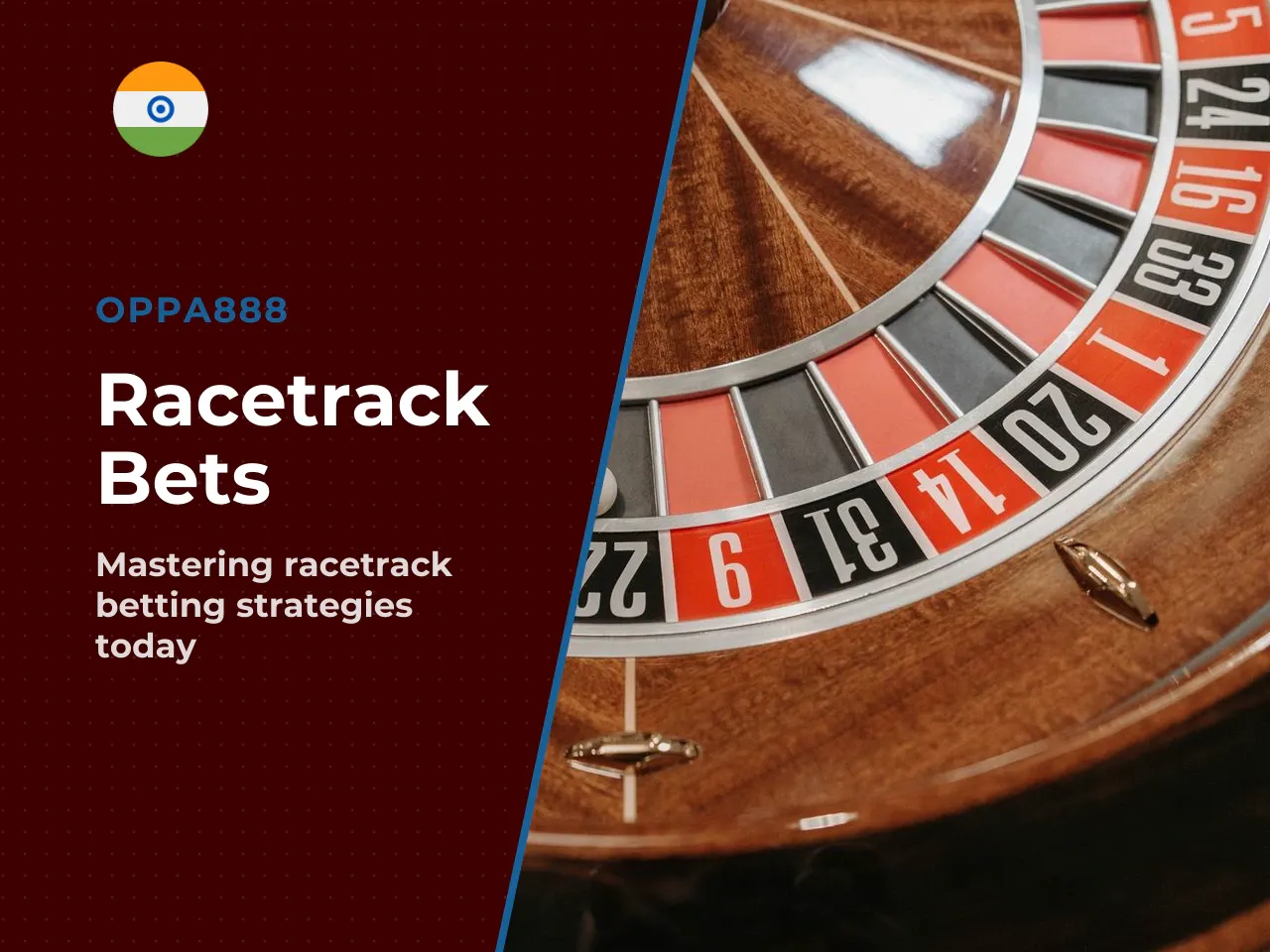
Two things every racetrack user should understand. First, announced bets are bundles of standard inside bets. They create no new odds, so each covered number still carries the wheel's underlying 2.70% expectation. Second, they multiply your exposure per round: a single Voisins du Zéro click stakes nine chips, so a ₹100 chip becomes a ₹900 round. Many live tables also offer «Neighbours», meaning a chosen number plus two to five pockets on either side, which behaves identically. Several straight-up bets, bought in one action.
I have watched new players use the racetrack because it looks elegant, then wonder why the bankroll drained nine times faster. That is not bad luck. That is chip count.
House Edge Mechanics and Mathematical Odds
The house edge is the casino's built-in mathematical advantage, and it lives inside the payout table. Because payouts are calculated as if the wheel contained only 36 pockets, the green zero creates a permanent gap between true odds and paid odds.
- European house edge formula: $$\text{Edge} = \left(\frac{37 - 35 - 1}{37}\right) \times 100 = \frac{1}{37} \approx 2.70%$$
- American house edge formula: $$\text{Edge} = \left(\frac{38 - 35 - 1}{38}\right) \times 100 = \frac{2}{38} \approx 5.26%$$
«On European roulette the expected loss is about €2.70 per €100 wagered; on American roulette it is €5.26, almost double.» AncientGames.org Comparative Analysis (2026)
The general form is Edge = (Pockets − Payout − 1) ÷ Pockets × 100, which explains why the same 35:1 Straight Up payout produces 2.70% on 37 pockets and 5.26% on 38. The payout schedule is frozen. Only the probability mass shifts, and it shifts against the player.
✅ FACT CHECK: INDEPENDENCE OF SPINS AND THE GAMBLER'S FALLACY
In probability theory, every roulette spin is a completely independent random event ($P(A \cap B) = P(A) \times P(B)$). The outcome of previous spins has absolutely zero influence on the next spin. Believing that Black is «due» because Red appeared five times running is a classic cognitive trap known as the Gambler's Fallacy (Stetzka, 2023). The house edge of 2.70% or 5.26% stays identical on every single spin regardless of history, and no scoreboard, hot-number display or «statistics» panel in a live lobby changes that.

European Roulette, American Roulette, and Alternative Game Variants
Choosing the right roulette game variant is the single most effective technical decision a player can make. It costs nothing, requires no skill, and roughly halves expected losses. If you take one action from this guide, take this one.
Expected Loss Comparison over ₹100,000 Total Stakes:
- French Roulette (Even-money bets): ₹1,350 expected loss (1.35% house edge)
- European Roulette (All bets): ₹2,700 expected loss (2.70% house edge)
- American Roulette (Standard bets): ₹5,260 expected loss (5.26% house edge)
- American Roulette (Top Line 0-00-1-2-3): ₹7,890 expected loss (7.89% house edge)
«Single-zero European roulette implies a €54 loss on €2,000 of wagers; American roulette implies €105, almost twice as much on identical stakes.» AncientGames.org Comparative Analysis (2026)
European Roulette: Wheel Mechanics and Edge Analysis
European roulette uses a single-zero wheel with 37 pockets (0 plus 1 to 36). That single zero delivers a uniform house edge of 2.70% across all standard inside and outside bets, which is unusually tidy for a casino game. Because of this mathematical balance, european roulette is the benchmark format for online play, and it is the layout to look for first when comparing licensed casinos offering European roulette.
American Roulette: The Double-Zero Penalty and Odds Disadvantage
American roulette adds a double-zero sector (00) alongside the single zero, expanding the wheel to 38 pockets. Two green losing pockets instead of one almost doubles the standard house edge, to 5.26%. The wheel sequence differs as well. One documented American order runs 0, 28, 9, 26, 30, 11, 7, 20, 32, 17, 5, 22, 34, 15, 3, 24, 36, 13, 1, 00, 27, 10, 25, 29, 12, 8, 19, 31, 18, 6, 21, 33, 16, 4, 23, 35, 14, 2, with 0 and 00 placed diametrically opposite.
American tables also carry the five-number «Top Line» bet (0, 00, 1, 2, 3), paying 6:1 against a 13.16% win probability. Result: a house edge of 7.89%, the worst standard wager available on any roulette table anywhere.
Conclusion, with sourcing. When European or French tables are available at the same stake level, choosing an American wheel is a purely negative trade. Two independent lines of evidence support that: the comparative expected-loss modelling published by AncientGames.org (2026), showing €105 versus €54 lost per €2,000 staked, and the arithmetic of the edge formula itself, where 2/38 is fixed at 5.26% regardless of bet type or session length.
French, Mini, and Other Roulette Games
- French roulette:the standard single-zero 37-pocket wheel plus two special rules, La Partage and En Prison. If the ball lands on 0, La Partage refunds 50% of even-money stakes, while En Prison holds the stake for the next spin. The expected loss on a one-unit even-money bet becomes $0.5 \times \frac{1}{37} = 0.01351$, dropping the edge on money bets to 1.35%. One limitation to remember: inside bets on French tables still carry the full 2.70%.
- Mini roulette:a compact 13-pocket wheel (0 plus 1 to 12) that speeds up the tempo but alters the odds structure, and typically carries a materially higher house edge than european roulette despite the friendlier look.
- Speed roulette:a streamlined live dealer variant from providers like Evolution, where round times drop to about 25 seconds from spin to spin, roughly half the standard live pace. Faster pace, faster theoretical loss per hour.
Modern Hybrid and Game-Show Live Roulette Variants
Beyond standard tables, live dealer developers have introduced hybrid formats that alter payouts or add random multipliers. The trade is always the same: multiplier upside is funded by cutting base payouts.
- Lightning Roulette and XXXtreme Lightning Roulette (Evolution):Straight Up bets pay 29:1 instead of 35:1. Before each spin, RNG «Lightning Strikes» assign multipliers from 50x up to 500x (up to a 2,000x max win in XXXtreme, which can also apply chain lightning and double strikes) to between one and five Lucky Numbers.
- Double Ball Roulette (Evolution):two balls launched simultaneously via a compressed-air mechanism. Inside bets win if either ball lands on the chosen number, with Straight Up paying 17:1; if both balls land in the same pocket on a Double Ball Straight bet, the payout reaches 1,300:1. Outside bets require both balls to satisfy the condition.
- Immersive Roulette (Evolution):multi-camera HD streams with slow-motion replays of the ball settling, maximising engagement without altering standard European odds (2.70%).
- Mega Roulette (Pragmatic Play Live):random «Mega Multipliers» from 50x to 500x applied to single-number wagers on a single-zero wheel, with a documented max win around 500x.
- Dual Play, Slingshot and Auto Roulette:Dual Play streams a physical land-based table to online players at the same time; Slingshot and Auto Roulette replace the human croupier with an air-compression launcher, delivering up to roughly 2,500 spins per day per table.
- Game-show adjacents (Lightning Storm, Mega Wheel, Crazy Time):marketed inside live-casino lobbies next to roulette, but built on money-wheel mechanics with completely different volatility profiles. Do not assume roulette maths applies to them.
Live Dealer Roulette: Architecture and Real-Time Streaming
Live dealer roulette connects remote users with real casino environments through high-definition video. Broadcasters such as Evolution and Pragmatic Play Live run continuous studios in Riga, Malta and Bucharest, so roulette players in India can watch real wheel physics on desktop or mobile. Optical camera recognition reads the winning pocket and pushes settlement data to the game server within seconds of the ball resting.

Live Dealer vs Standard RNG Virtual Roulette
- RNG virtual roulette:software algorithms generate outcomes instantly. Spins are pure computer simulations with visual animation, and fairness is established statistically through RNG certification (acceptable randomness, uniform distribution, unpredictability, non-repeating cycles).
- Live dealer roulette:a human dealer operates commercial-grade physical wheels and real balls in real time. Spin integrity is visible through multiple camera angles and optical readers, and regulators require commercial-casino-grade equipment, staff supervision, surveillance and auditable game logs.
- Social dimension:live tables support dealer chat and shared table presence. RNG roulette is a solo product.
- Pace and cost:RNG roulette can be spun as fast as you can click, which raises hourly theoretical loss sharply even at identical stakes. A ₹500 bet at 100 RNG spins per hour costs about ₹1,350 per hour in expectation; the same bet at 40 live spins per hour costs about ₹540. Same edge, very different burn rate.

How to Select the Ideal Live Roulette Table
Evaluating live dealer roulette tables comes down to four parameters:
- Stake limits: micro-limit tables starting at ₹10 to ₹50 per spin, versus VIP tables allowing wagers up to ₹500,000. Public listings show live roulette from as little as €0.10 up to €5,000 or more per position.
- Game variant: prioritise live european or live French roulette over double-zero options, and check whether hybrid tables have reduced base payouts.
- Round speed: standard tables run around 60 seconds per round, while Speed Roulette or Speed Auto Roulette fire every 25 seconds.
- Language and studio: English-speaking dealers or localised table interfaces, with a named studio and a named provider.
Benefits and Technical Constraints of Live Casino Roulette
- Benefits: transparent physical spin optics, authentic casino atmosphere, real-time chat with croupiers, and multi-camera views.
- Technical limitations: a stable high-speed connection is essential. Streaming delays happen, and fixed betting timers enforce hard cutoffs, which forces quick decisions. Customer-facing regulatory rules require operators to disclose that live transmissions may be delayed or interrupted, and to explain how interrupted rounds are settled.
A behavioural constraint that gets ignored far too often:
«Participation in live table games is more strongly associated with markers of harm than participation in simulated versions; roulette shows the strongest association of all table games.» Delfabbro et al., International Journal of Mental Health and Addiction (2023)
Put plainly: the qualities that make live roulette enjoyable, real dealer presence, continuous rounds, chat, no natural stopping point, are the same qualities that make session limits non-negotiable.
- Checklist for selecting a live dealer roulette table:
- Verified single-zero european wheel, or a French roulette layout with La Partage enabled.
- Table minimum fits within 1% to 2% of your total session bankroll.
- Transparent software provider (Evolution, Pragmatic Play, Ezugi).
- Clear display of the current round timer and a confirmed payout table.
- Straight Up payout confirmed at 35:1, or knowingly accepted at 29:1 on Lightning-style tables.
- Stable HD stream with no lag or buffering on mobile networks.
- Documented interruption policy: what happens to your stake if the stream drops mid-round.
Roulette Strategy: Risk Control Without Profit Myths
Plenty of betting progressions claim to «beat» the wheel. None of them can mathematically remove the built-in house edge. Understanding how betting systems actually behave lets you manage money responsibly, without buying into false promises of guaranteed profit.
⚠️ Disclaimer: this information is general in nature and does not replace professional advice. Real-money wagering carries financial risk. If you are struggling to control your gambling, contact a player-support helpline in your jurisdiction.

Martingale, Fibonacci, and Classic Progression Systems
- Martingale:double your stake after every loss on an even-money bet, for example Red/Black. When a win eventually lands, it recovers previous losses plus a net profit equal to the base bet. Bankroll needed to survive $N$ consecutive losses: $\text{Base Bet} \times (2^N - 1)$, so 127 units for 7 losses and 1,023 units for 10.
- Fibonacci:a negative progression that raises wagers along the Fibonacci sequence (1, 1, 2, 3, 5, 8, 13 and so on) after losses, stepping back two numbers after a win. Slower escalation than Martingale, longer recovery horizon.
- D'Alembert:raise stakes by one unit after a loss, cut by one unit after a win. Lower volatility than Martingale, because progression is linear rather than exponential.
- Labouchere:a written line of numbers; you bet the sum of the first and last figures, delete both on a win, append the lost amount on a loss, and continue until the line clears. It is a bookkeeping scheme, not an edge.
- Paroli:a positive progression that doubles after wins and resets to base after three consecutive wins or any loss. The only system listed here that cannot bankrupt you faster than flat betting, because escalation is funded by winnings rather than by your bankroll.
In our analysis of progressive betting systems for casino review frameworks, we tested Martingale across a simulated 100-session run on european roulette tables. Short-term wins appeared in 95% of small sessions, which is exactly why the system feels convincing. Then a single streak of 7 consecutive losses pushed the required stake from ₹100 to ₹12,800, hit the table maximum cap, and wiped out the test bankroll. One streak. That is the whole story of progression betting under real casino rules.
Independent large-scale simulation reaches the same conclusion at far greater sample size:
«Across 10,000 simulated sessions of 10,000 rounds each, all five betting systems converged on an average loss of 2.70% of total amounts wagered on European roulette.» Wild.io Monte Carlo Simulations (2026)
Why Betting Systems Cannot Overcome the House Edge
Betting strategies adjust the variance and the distribution of short-term wins and losses. They do not touch the mathematical expectation of the game.
«The Martingale system only operates safely in a hypothetical casino with no table limits and for a player with unlimited capital.» University of Nevada Las Vegas Martingale Analysis (2025)

Because each spin is independent, every unit wagered carries an expected value of $-0.027$ on European wheels ($-0.0526$ on American). Multiplying stakes after losses simply pushes more money through that negative expectation, which accelerates bankroll exhaustion when a long losing streak arrives. And streaks do arrive. Peer-reviewed treatments of martingale-style betting explicitly include the «losing all bets» case, confirming that total stake loss is a structural feature of the strategy, not bad luck.
Two hard constraints kill every progression in practice. The table maximum, which halts the sequence regardless of how much money you have left, and the finite bankroll, which halts it regardless of how much table headroom remains.

Bankroll Management and Responsible Gambling Controls
To keep roulette play sustainable, treat these as rules rather than suggestions:
- Set session budgets. Allocate a fixed entertainment spend you can comfortably afford to lose. Practical anchor: the table minimum should not exceed 1% to 2% of the session bankroll.
- Enforce loss limits. Stop the moment you hit your pre-set stop-loss. Regulatory standards (AGCO, NCPG) require licensed platforms to stop play automatically when a player-set limit is reached, and to delay any relaxation of that limit by at least 24 hours.
- Never chase losses. Doubling down to recover lost money is the most damaging behaviour in table-game play, full stop.
«Loss chasing is the leading driver of gambling harm; observable behavioural markers include in-session deposits and deposits declined for insufficient funds.» Delfabbro et al., International Journal of Mental Health and Addiction (2023)
- Use responsible gambling tools. Deposit caps, reality checks, session timers, self-exclusion. These are only meaningful on licensed platforms with responsible gambling controls, where limit-setting is enforced at account level instead of being left to willpower.
- Track time, not just money. At 40 to 60 live spins per hour, a «small» ₹200 flat bet turns over ₹8,000 to ₹12,000 hourly. Set a clock alarm next to the loss limit.
- Keep bonus play and entertainment play separate. Never let a wagering requirement dictate session length. Turnover targets and bankroll safety pull in opposite directions.
🚨 ALERT: RISK WARNING ON PROGRESSIVE BETTING SYSTEMS
Progressive betting systems like Martingale pose severe financial risks. Stake requirements grow exponentially ($2^n$). After just 8 consecutive losses, a starting ₹500 bet requires a ₹128,000 stake, total funds wagered reach ₹255,500, and the expected recovery remains a tiny ₹500 profit. Hitting table stake caps or emptying your bankroll locks in catastrophic losses permanently. On a European wheel, 8 consecutive even-money losses occur roughly once every 220 sequences. Not «never».
FAQ: Online Roulette Questions Answered
French roulette with La Partage or En Prison, at 1.35% house edge on even-money bets (Red/Black, Odd/Even, High/Low). If French tables are unavailable, european roulette at 2.70% is the next best choice. Avoid american roulette (5.26%), and never take the Top Line bet (7.89%).
Real-money online gaming in India is heavily restricted and regulated under the Promotion and Regulation of Online Gaming Act 2025 and Rules 2026, with additional variation at state level. This guide is informational, not legal advice. Verify the current statutory position for your state, and remember that an offshore licence is not a substitute for domestic legality.
UPI payouts typically settle within 1 to 4 hours after operator approval; NetBanking and IMPS run 2 to 24 hours; crypto can clear inside the hour. The most common delay causes we recorded were incomplete KYC, a name mismatch between the gaming account and the UPI handle, and closed-loop rules requiring withdrawal on the same rail as the deposit.
Usually only partially. Operator terms commonly assign roulette a 5% contribution, sometimes up to 10%, so a ₹300,000 wagering target becomes ₹6,000,000 of roulette turnover. Max bet caps (typically €5 or ₹400) and bans on hedged Red/Black betting apply while bonus funds are active.
No. It converts many small wins into rare catastrophic losses. The bankroll needed to survive $N$ losses is $2^N - 1$ base units, and table maximums cut the sequence short before recovery. Monte Carlo testing across 10,000 sessions shows all major systems converging on the same 2.70% loss rate on European wheels.
Neither is «fairer» in expectation. Both carry the same house edge for the same wheel type. Live tables offer visual verification of a physical spin and are supervised under commercial-casino equipment standards; RNG games rely on statistical certification of randomness. Live play is slower, which reduces hourly theoretical loss, but it is more strongly associated with behavioural markers of harm.
Announced (call) bets placed on the racetrack, covering physical arcs of the wheel: Voisins du Zéro (17 numbers, 9 chips), Tiers du Cylindre (12 numbers, 6 chips), Orphelins (8 numbers, 5 chips) and Jeu Zéro (7 numbers, 4 chips). They are bundles of ordinary inside bets, so the edge stays at 2.70% while your stake per round rises.
Generally no. Demo mode is normally limited to RNG tables, because live studio streams carry real operational cost. Use demo play for layout familiarity and rule checking, then verify the live table's payout schedule before your first real bet.
It means the base Straight Up payout is cut from 35:1 to fund the 50x to 500x multipliers (up to a 2,000x max win on XXXtreme). Multipliers are RNG-assigned to one to five Lucky Numbers each round, and the house edge on straight-up bets is higher than on standard european roulette.
Next Steps: Your Practical Action Plan
1
Verify before you value-hunt. Look up the operator's licence number in the regulator's public register, and check for a dated RNG or games-testing certificate (eCOGRA, iTech Labs, GLI).
2
Complete KYC on day one. Upload ID, address proof and payment-instrument proof before depositing, so a win is never held hostage by paperwork.
3
Open the cashier, not the lobby. Confirm UPI and NetBanking limits, fees and processing windows, then match the withdrawal rail to your deposit rail.
4
Spend 15 minutes in demo mode to learn chip placement and confirm the table rule set: single zero, La Partage, payout schedule.
5
Choose the wheel deliberately. French, then European, then nothing else. Confirm Straight Up pays 35:1 unless you are knowingly playing a multiplier variant.
6
Set three numbers before your first spin: session budget, stop-loss and time limit. Activate deposit caps and reality checks in account settings.
7
Size the table to the bankroll: table minimum at or below 1% to 2% of session funds. Flat-bet rather than progress.
8
Treat bonuses as optional. If the wagering maths (contribution × rollover × max bet) does not fit your realistic session volume, decline the offer. Declining a bonus is a valid move.
9
Review sessions weekly, not per spin. Log turnover and net result. If you notice in-session deposits or chasing behaviour, use self-exclusion tools immediately.

Appendix: Source Notes and Editorial Corrections
For transparency, this update revised several citations that were previously attached to claims they did not directly support:
- Bonus contribution (5% to 10%). Previously credited to Torrance et al. (2026). That study concerns miscomprehension of wagering requirements, not contribution percentages. The 5% figure is now sourced to published operator bonus terms (Bovada, Mega Dice), while Torrance et al. (2026) is cited for the finding that numerical examples reduce an offer's perceived attractiveness.
- Demo play effects. Previously framed as «overconfidence». Fiedler et al. (2024) documents a priming effect, and reports 54% of problem gamblers attributing real-money betting to simulated games, with a 33% problem-gambling rate among dual-mode players. Wording corrected accordingly.
- House edge numbers. The prior reference (Wild.io Technical Guide, 2026) contained no numerical worked example and has been replaced with AncientGames.org Comparative Analysis (2026), which quantifies loss per €100 and per €2,000 staked. Wild.io is retained solely for its Monte Carlo simulation dataset, flagged as a commercial (non peer-reviewed) source, and paired with the UNLV Martingale Analysis (2025) for academic support.
- Live-format risk. The prior reference (UKGC Remote Technical Standards, 2024) addresses technical delay disclosure, not behavioural harm. It is now cited only for interruption and delay obligations, while Delfabbro et al. (2023) supports the harm-association claim.
- Payout mechanics. The Bavarian State Casinos rules (2023) and Atlantic Lottery's How to Play, Roulette (2026) are cited as venue-level rule publications documenting standard payout ratios and the chip-position principle. They do not certify any specific online platform.
- Legal framework. References to the Promotion and Regulation of Online Gaming Act 2025 and Rules 2026 describe the regulatory frame at the time of writing. Statutory nomenclature and state-level rules change; confirm the current text before acting on it.
This guide is published for informational purposes for adults of legal gambling age (18+/21+ by jurisdiction). It is not legal, financial or tax advice. Gambling involves risk of financial loss. If gambling stops being entertainment, contact a recognised support helpline.